 Skip to main content Skip to footer
In the food industry, packaging has long outgrown its original role as a simple protective layer. Its design, material composition, and structural choices directly determine whether a product retains its original flavor, aroma, and texture throughout the journey from production line to consumer’s table. In many ways, packaging serves as the final line of defense for product quality — and the first impression of the consumer experience.
A Barrier Against External Factors
Flavor and texture are highly sensitive qualities, easily compromised by oxygen, moisture, and light. Oxidation can turn fats rancid, moisture can soften and deform crisp products, and light exposure can accelerate the loss of color and nutrients.
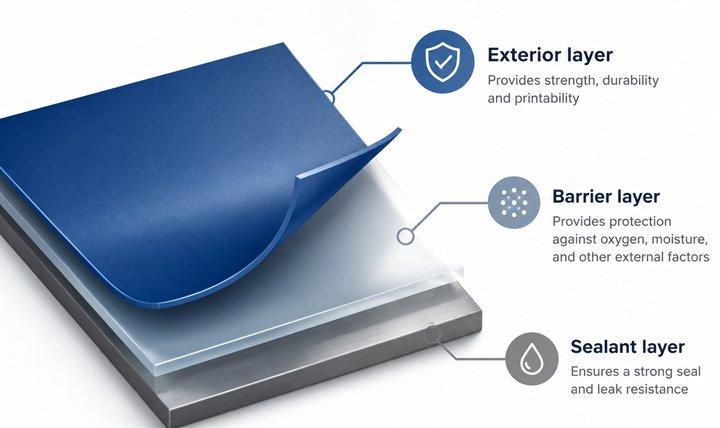
Flexible packaging, with its multilayer composite structure, is specifically designed to block these external threats, effectively preventing oxidation, aroma loss, and texture degradation.
Each film layer serves a distinct purpose: some layers block water vapor to prevent moisture absorption or loss; others are dedicated to blocking oxygen and external odors from penetrating the package; and still others provide mechanical strength or heat resistance, ensuring the packaging itself withstands transport and processing without damage. It is precisely this careful balance between protection and function that allows a food product’s sensory qualities to remain intact over time.
The Importance of Sealing and Internal Atmosphere
Seal quality is the critical factor determining whether the contents are preserved in optimal condition. Even the finest multilayer film will fail to deliver its protective benefits if the seal itself is compromised.
Beyond sealing, vacuum packaging and modified atmosphere packaging (MAP) are widely used in food preservation. By reducing the oxygen level inside the package and adjusting the gas composition, these technologies can significantly extend shelf life without altering the product’s original flavor or texture — truly extending time without sacrificing quality.

Material Selection Tailored to Each Product
Not all food products require the same level of protection. Dry goods primarily need protection against moisture, while fresh or cooked foods require materials that can withstand high-temperature sterilization or cold-chain transport while maintaining structural integrity.
For this reason, selecting the right film or pouch for each specific product — rather than relying on a one-size-fits-all solution — is essential to safeguarding food quality.
Good Packaging Is an Extension of Brand Trust
Quality packaging is more than a preservation tool; it is a key part of the consumer experience. A product that consistently maintains its freshness, aroma, and texture gives consumers a stable, enjoyable experience every time they open it, building trust and reinforcing the brand’s image of quality in the consumer’s mind.
We specialize in developing flexible packaging solutions designed to maximize the protection of food’s original flavor, texture, and quality. Contact us, and let our team of experts help you find the packaging solution best suited to your product.


