 Skip to main content Skip to footer
Whether you’re launching a new food brand, optimizing packaging costs, or looking to extend product shelf life, choosing the right flexible pouch is one of the most critical decisions you’ll make.
Today’s consumers demand more from packaging: it needs to be lightweight, visually appealing, easy to use, and environmentally friendly. At the same time, manufacturers and brand owners need packaging that effectively protects the product while genuinely reducing shipping and storage costs. Flexible pouches meet both sets of needs at once, which is why they’ve become one of the fastest-growing packaging formats across food, beverage, pharmaceutical, personal care, and industrial sectors.
That said, choosing the right flexible pouch involves far more than simply picking a pouch shape. It requires weighing multiple factors together — product characteristics, barrier performance requirements, filling processes, print quality, regulatory compliance, and budget.
This guide is written for procurement managers, product developers, packaging engineers, distributors, and brand owners. Its goal is to provide a genuinely practical decision-making reference — not just basic definitions.
In this guide, I’ll cover:
- What flexible pouches are
- Common pouch styles and their best-fit use cases
- How packaging materials affect product protection
- How to choose the right pouch structure
- Packaging recommendations by industry
- Available customization options
- Common packaging challenges and how to solve them
- How to choose a reliable flexible pouch supplier
By the end, you’ll have a clear decision-making framework to help you select a flexible pouch solution that improves product performance, controls costs effectively, and supports long-term business growth.
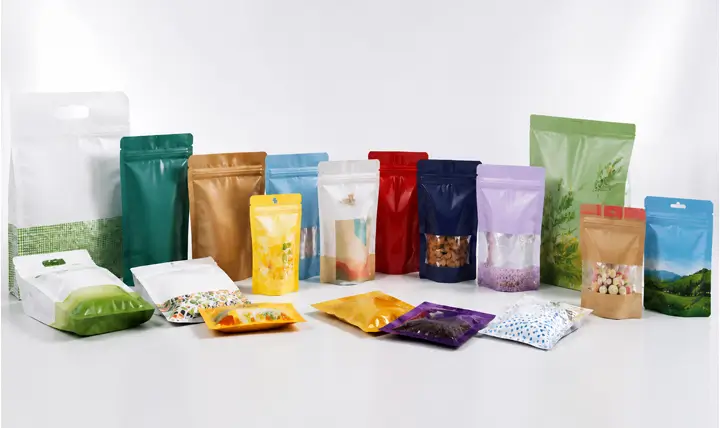
What Is a Flexible Pouch?
Flexible pouches are a category of soft packaging materials and containers that conform to the shape of the product inside. They’re typically made from plastic, film, paper, foil, or woven materials. Thanks to their lightweight construction, portability, foldability, and adaptable shape, flexible pouches are widely used across food, personal care, industrial, and logistics applications.
Flexible Pouch Packaging vs. Rigid Packaging

| Comparison Dimension | Flexible Pouch | Rigid Packaging |
| Weight | 60-80% lighter than rigid containers of the same capacity | Glass/metal/hard plastic containers are significantly heavier |
| Shipping & Logistics | Small unit volume, foldable and stackable — increases loading capacity by 3-5x within the same space | Requires fixed space and protective cushioning against breakage |
| Storage Space | Empty pouches can be flat-stacked, taking up minimal space | Empty bottles/cans still occupy their full volume |
| Printing & Branding | Supports high-definition digital printing, matte/gloss/tactile coatings, and full-pouch design coverage | Print area limited by container curvature, or requires additional labeling |
| Barrier Performance | Customizable oxygen, moisture, and light barrier properties via multi-layer laminate structures (e.g., metallization, EVOH) | Glass/metal offer the best natural barrier properties |
| Overall Cost | Lower material cost, but requires dedicated sealing/forming equipment | Higher material cost, but equipment is more universally applicable |
| Shelf Appeal | Stand-up pouches, custom shapes, and windowed designs enhance differentiation | Classic shapes convey trust, well-suited to premium positioning |
| Sustainability | Mono-material tear pouches/paper-based laminates are recyclable, with a lower carbon footprint | Glass/metal can be infinitely recycled, but production is energy-intensive |
While rigid packaging remains necessary for certain applications, flexible pouches offer the best overall balance of protection, brand promotion, cost-efficiency, and sustainability for most products.
Common Types of Flexible Pouches
Not every pouch style suits every product. Choosing the right pouch style affects filling efficiency, shelf presentation, product protection, and consumer convenience. Below are the 10 most widely used pouch types on the market today.

Stand-Up Pouch
Walk through any supermarket and you’ll notice pouches standing upright on the shelves — filled with nuts, juice, laundry detergent, and more. They stay upright without any external support, saving shelf space while standing out visually.
These are stand-up pouches, the most versatile and popular form of flexible packaging. Thanks to a gusseted bottom, they can stand upright on store shelves, maximizing product visibility and branding opportunities.
Typical Applications
Coffee, snacks, nuts, cereal, candy, protein powder, pet food, frozen food
Key Advantages
- Excellent shelf presentation
- Rich printing capabilities
- Compatible with zippers and spouts
- High filling efficiency
- Wide range of functional customization options
- Suitable for retail and e-commerce
Common Material Structures
PET/PE, PET/AL/PE, PET/EVOH/PE, PET/CPP
Flat Pouch (3-Side Seal Pouch)
Flat pouches, also known as three-side seal pouches, are widely used for single-serve products and applications requiring compact packaging. They take up minimal storage space and are well-suited to high-volume production.
The three-side seal pouch is a classic laminated pouch format. Heat sealing joins the left, right, and bottom edges completely, leaving the top open for filling. It’s one of the most versatile and widely used base pouch styles in food packaging.
Typical Applications
Sauces, condiments, wet wipes, medical products, cosmetics, pet supplies
Key Advantages
- Easy to fill
- Low material consumption
- Cost-effective
- Fast production speed
- Wide range of customization options
- Excellent seal integrity
Common Material Structures
PET/PE, PET/AL/PE, PET/AL/PA/PE, PA/RCPP, VMPET/PE
Vacuum Pouch
Vacuum pouches, also known as reduced-pressure packaging, remove all the air from inside the package before sealing, creating a highly low-oxygen environment inside the pouch. With minimal oxygen present, microorganisms have no viable conditions to survive, helping keep products fresh and preventing spoilage.

Vacuum pouches are specifically engineered to remove air before sealing, significantly extending product shelf life. They’re typically made from durable, puncture-resistant materials, making them one of the most cost-effective options for commercial and household use.
Typical Applications
Fresh meat, processed meat, cheese, seafood, ready meals
Key Advantages
- Excellent oxygen protection
- Outstanding puncture resistance
- Saves storage and shipping space
- Suitable for a wide range of applications
- Preserves food flavor and nutrition
- Effectively prevents freezer burn
- Longer shelf life
Common Material Structures
PA/PE, PA/EVOH/PE, MDOPE/EVOH/PE, PA/AL/RCPP, PET/PE, PET/PA/PE
Spouted Pouch
The spouted pouch combines the flexibility of film packaging with the convenience of a resealable spout, making it an excellent alternative to rigid bottles. It’s widely used for liquid and semi-liquid products that require controlled pouring and portability.
Typical Applications
Baby food, fruit purée, yogurt, juice, cooking oil, tomato sauce, liquid detergent, household cleaners
Key Advantages
- Convenient, spill-resistant pouring
- Resealable for repeated use
- Lighter than bottles, lowering shipping and storage costs
- Strong shelf presentation
Common Material Structures
PET/NY/PE, PET/AL/PE, PET/EVOH/PE
Quad Seal Pouch (Block-Bottom Pouch)
The quad seal pouch is sealed at all four corners, creating a box-like structure that allows the pouch to stand upright while maximizing usable packaging space and volume capacity. Compared to a standard stand-up pouch, it has a more premium appearance and greater structural stability.
Typical Applications
Pet food, baked goods, rice, grain products, specialty foods
Key Advantages
- Premium shelf appearance
- Strong 3D visual effect
- Excellent stackability
- Large printable surface area
- High filling efficiency
- Suitable for heavier products
Common Material Structures
PET/AL/PE, PET/VMPET/PE, PET/EVOH/PE
Side Gusset Pouch
Side gusset pouches expand on both sides during filling, making them ideal for products requiring larger pack volumes. Unlike stand-up pouches, they typically rely on the product’s own weight rather than a bottom gusset to hold their shape.
Typical Applications
Coffee, tea, animal feed, flour, powdered ingredients
Key Advantages
- High fill capacity
- Cost-effective
- Well-suited for automated filling
- Compatible with one-way degassing valves
Common Material Structures
PET/PE, PET/AL/PE
Retort Pouch
Retort pouches are specially engineered to withstand high-temperature sterilization between 121°C and 135°C while maintaining seal integrity and barrier performance. They reduce weight without compromising food safety, making them an excellent alternative to traditional metal cans.
Typical Applications
Ready meals, curry sauce, seafood, soup, wet pet food, military rations
Key Advantages
- High-temperature resistance
- Long-term shelf stability without refrigeration
- Lightweight
- Lower shipping costs
Common Material Structures
PET/AL/NY/RCPP
Pillow Pouch
The pillow pouch is one of the most economical packaging formats, typically produced on vertical form-fill-seal (VFFS) lines.

Typical Applications
Chips, candy, cookies, frozen vegetables, baked goods
Key Advantages
- Fast production speed
- Low packaging cost
- High material utilization
Common Material Structures
PET/PE, BOPP/PE
Shaped Pouch
Unlike traditional rectangular packaging, shaped pouches are die-cut into custom shapes that enhance brand recognition.
Typical Applications
Baby food, cosmetics, beverage concentrates, promotional packaging
Key Advantages
- Unique shelf presence
- Higher perceived product value
- Strong branding impact
Common Material Structures
PET/PE, PET/AL/PE
Rollstock Film
Strictly speaking, rollstock film isn’t a pouch — but it’s one of the most important flexible packaging formats, since it’s processed into pouches directly on automated packaging lines. It’s widely used by high-volume manufacturers running VFFS, HFFS, vacuum packaging, thermoforming, and MAP equipment.
Typical Applications
Meat processing, cheese, frozen food, snacks, bakery, medical packaging
Key Advantages
- Highest production efficiency
- Lower packaging cost
- Fully customizable width and specifications
- Compatible with high-speed packaging machinery
Common Material Structures
Customized by application (commonly PET/PE, PA/PE, PET/AL/PE)
A Guide to Flexible Pouch Materials: Matching the Right Structure to Your Product
Even after choosing your pouch style, you’ve only made half the decision.
What truly determines whether packaging effectively protects the product, processes smoothly on production equipment, and delivers the expected shelf life is the material structure itself.
So instead of asking “Which material is best?”, the better question is: “Which material combination is right for my product?”
Every layer in a flexible pouch serves a specific function. By combining different materials, manufacturers can balance protection, appearance, processability, sustainability, and cost.

PET (Polyester)
PET is typically the outermost layer of a flexible pouch.
Its main role isn’t barrier protection — it’s providing structural strength and excellent print performance.
Key Advantages
- High dimensional stability
- Excellent print quality
- Good heat resistance
- Scratch-resistant
- Premium visual appearance
PET is usually laminated with PE, foil, EVOH, or nylon to form multi-layer film structures.
PET has poor tear strength and isn’t heat-sealable.
BOPP (Biaxially Oriented Polypropylene)
BOPP is known for excellent clarity and gloss, making it a top choice for packaging that needs to showcase the product visually.
Key Advantages
- High clarity, high gloss
- Excellent moisture resistance
- Good printability
- Cost-effective
Commonly used for candy, baked goods, and pastries where shelf presentation matters most.
PE (Polyethylene)
PE is the most widely used heat-sealing material in flexible packaging.
Nearly every pouch uses a PE sealing layer, since it delivers reliable heat-seal performance while meeting food safety requirements.
Key Advantages
- Excellent heat-seal performance
- Good moisture resistance
- Good flexibility
- Low cost
- Meets food-contact material requirements
Typical applications include fresh food, frozen food, vegetables, dairy, and baked goods.
PE has poor heat resistance, moderate barrier properties, and moderate printability.

PA (Nylon)
When packaging needs to withstand sharp edges, mechanical stress, or vacuum pressure, nylon is usually the material of choice.
Compared to PET alone, nylon significantly improves puncture resistance.
Ideal Applications
- Fresh meat
- Bone-in meat
- Seafood
- Cheese
- Vacuum packaging
Thanks to its excellent toughness, nylon is also commonly used in vacuum pouches and thermoformed films. However, it’s highly moisture-absorbent, and its barrier performance can be affected by ambient humidity.
EVOH (Ethylene Vinyl Alcohol)
If oxygen is your primary concern, EVOH is currently one of the best barrier materials available.
Even a very thin layer of EVOH can significantly reduce oxygen transmission, helping preserve product freshness and extend shelf life.
Ideal Applications
- Cheese
- Processed meat
- Fresh meat
- Coffee
- Medical products
Important note: EVOH has weak moisture resistance on its own, and humidity degrades its barrier performance. It’s typically sandwiched between moisture-resistant layers like PE to perform at its best.
Foil (Aluminum Foil)
When the highest level of protection is required, foil remains the most effective barrier material available.
It blocks:
- Oxygen
- Moisture
- UV light
- Aroma loss
This makes foil ideal for products highly sensitive to environmental conditions. However, it’s prone to cracking, isn’t heat-sealable on its own, is costly, and is opaque.
Typical Applications
- Coffee
- Nutritional powders
- Pharmaceutical packaging
- High-value food products
That said, foil has clear drawbacks: it reduces packaging transparency and makes recycling more difficult. As a result, some brands are shifting toward EVOH-based structures as an alternative.
VMPET (Metallized PET)
VMPET offers barrier performance close to that of aluminum foil, but at a lighter weight and lower cost.
Compared to pure foil, it offers:
- Better flexibility
- Lower material cost
- An attractive metallic appearance
- Good oxygen and moisture barrier performance
Commonly used for snacks, pet treats, candy, and dry goods packaging. Its barrier performance is not as strong as pure aluminum foil.
CPP (Cast Polypropylene)
When packaging needs to withstand high-temperature, high-pressure sterilization (retort processing), CPP is the go-to heat-sealing material.
It maintains seal integrity through the retort process while offering good moisture resistance and moderate mechanical strength.
Typical Applications
- Retort pouches
- Ready-to-eat meal kits
- Food packaging requiring high-temperature sterilization
CPP is less flexible than PE and becomes brittle at low temperatures.
How Materials Work Together
Most flexible pouches aren’t made from a single material — they’re laminates of 2-4 different materials, for example:
PET/PE — an economical base structure suited to products without high barrier requirements
PET/Foil/PE — a high-barrier structure suited to sensitive products like coffee and pharmaceuticals
PET/EVOH/PE — balances barrier performance with transparency and recyclability
PET/PA/PE — combines puncture resistance with heat-seal performance, suited to vacuum packaging
When choosing a material structure, consider the product’s oxygen sensitivity, moisture content, mechanical protection needs, processing requirements (such as retort sterilization), and the brand’s sustainability goals.
Industry-Specific Flexible Packaging Solutions
Different products require different barrier performance, material structures, pouch specifications, and packaging processes. Choosing the wrong combination can shorten shelf life, increase packaging costs, or cause problems during filling and shipping.
If you need an experienced packaging specialist to help you evaluate your options — or a reliable flexible packaging supplier — NK Packing is the right partner. With extensive flexible packaging experience, we can tailor the best solution to your specific packaging needs.
Flexible Pouch Customization Options
Modern flexible packaging is no longer just about protecting the product.
It also plays a major role in branding, consumer convenience, production efficiency, and product differentiation.
Today, buyers can customize nearly every aspect of a pouch.
Closure Options
Resealable Zipper
One of the most requested features. Suited to products consumed over multiple occasions.
Best for: coffee, pet food, snacks, frozen food
Slider Zipper
Delivers a premium user experience.
Commonly used for: baby products, premium snacks, household products
Spout
Suited to liquid products. Available in multiple diameters depending on filling equipment.
One-Way Degassing Valve
Essential for freshly roasted coffee. Allows CO2 to escape while blocking oxygen from entering.
Functional Features
Buyers can also choose from:
- Tear notch
- Laser scoring
- Hang holes
- Euro slots
- Rounded corners
- Carry handles
- Clear windows
These features improve convenience while enhancing retail presentation.
Surface Finishes
Packaging appearance has a significant impact on consumer perception. Common finishes include:
- Matte Finish — creates a premium, modern look. Ideal for specialty foods.
- Gloss Coating — delivers vibrant colors with strong visual impact. Commonly used for candy and snack products.
- Soft-Touch — adds a velvety tactile experience. Suited to high-end packaging.
- Spot UV — uses gloss coating to highlight selected graphic elements. Ideal for premium branding.
- Metallic Finish — creates a premium look while reinforcing high-end positioning.
Printing Options
Choosing the right printing method depends on order volume, design complexity, and lead time.
| Print Method | Best For | Advantages |
| Gravure Printing | High-volume production | Excellent image quality, consistent color, low cost at scale |
| Flexographic Printing | Medium to large orders | Cost-effective, fast production, suited to simple through complex graphics |
| Digital Printing | Small batches, multiple SKUs | No plates required, fast turnaround, ideal for market testing and personalization |
Sustainable Packaging Options
Sustainability is increasingly becoming a procurement requirement, not just a marketing advantage. Many brands are actively transitioning to packaging structures that reduce environmental impact while maintaining product performance.
Common options include:
- Recyclable mono-material PE structures
- Mono-material PP packaging solutions
- MDOPE structures
- Material down-gauging
- Compostable packaging film
- Post-consumer recycled (PCR) content
- Solvent-free lamination
- Designs developed to align with evolving packaging regulations
It’s worth noting that sustainability assessments should always be evaluated alongside barrier performance, product protection, and local recycling infrastructure capabilities.

How to Choose the Right Flexible Pouch
Choosing the right flexible pouch involves far more than picking a pouch style. The ideal solution balances product protection, production efficiency, branding, sustainability, and cost.
Don’t start with the packaging material — start with your product requirements.
Understand Your Product
Every product has different packaging needs.
Consider your product carefully:
Is it oxygen-sensitive?
Does it absorb moisture?
Is it light-sensitive?
Does it contain fat or oil?
Does it require refrigeration or freezing?
Will it undergo high-temperature sterilization?
For example:
| Product | Primary Packaging Concern |
| Coffee | Oxygen and aroma protection, strong seal integrity |
| Cheese | High barrier performance |
| Fresh meat | Oxygen resistance and puncture resistance, high barrier |
| Frozen food | Moisture resistance and low-temperature flexibility, good puncture resistance |
| Powders | Moisture and leak resistance |
| Liquids | Seal integrity |
Understanding these characteristics is the foundation for choosing the right packaging.
Determine Your Shelf-Life Target
The required shelf life directly affects the barrier structure needed.
A product with a two-week shelf life rarely needs the same laminate as one with a twelve-month shelf life.
Generally speaking:
| Shelf Life | Recommended Barrier Level |
| Less than 1 month | Low |
| 1-6 months | Medium |
| 6-12 months | High |
| Over 12 months | Ultra-high |
Matching the barrier level to your target helps control costs without compromising quality.
Choose the Right Pouch Style
The pouch style should match both the product and the target sales channel.
| Pouch Style | Best For |
| Stand-up pouch | Retail food, snacks, coffee, pet food |
| Flat pouch | Samples, sachets, condiments |
| Vacuum pouch | Meat, seafood, cheese |
| Spouted pouch | Liquids, sauces, baby food |
| Quad seal pouch | Premium ground coffee |
| Rollstock film | High-speed automated production |
Match Packaging to Your Filling Equipment
Packaging design should adapt to the production line — not the other way around.
Before finalizing the material structure, confirm:
- Machine type (VFFS, HFFS, thermoforming, vacuum chamber, MAP equipment)
- Film width
- Roll diameter
- Core size
- Fill speed
- Heat-seal temperature
- Production capacity
Early coordination between your packaging supplier and equipment team can help avoid costly production issues.
Balance Performance and Cost
The most expensive structure isn’t necessarily the best one.
For example:
Using foil to package frozen vegetables may provide unnecessary barrier protection.
Using a simple PET/PE structure for premium coffee may lead to aroma loss and a shortened shelf life.
The goal is to achieve the lowest total packaging cost — not simply the lowest material price.
Consider Sustainability
If sustainability is part of your brand strategy or a regulatory requirement, explore:
- Mono-material recyclable structures (MDOPE/BOPP/BOPA/BOPE)
- Lightweight design
- PCR content
- Reduced material thickness
- Optimization for local recycling systems
These choices should always be evaluated alongside barrier performance and machine compatibility.
Common Packaging Problems and How to Avoid Them
Even high-quality materials can cause problems if the structure or production process isn’t properly designed.
Here are some of the most common issues with flexible pouches:
| Problem | Possible Cause | Recommended Solution |
| Seal failure | Incorrect seal temperature or contamination in the seal area | Optimize seal parameters and keep sealing surfaces clean |
| Delamination | Incompatible adhesive or insufficient curing | Choose the right lamination system and allow adequate curing time |
| Pinholes | Sharp product edges or insufficient puncture resistance | Add nylon layers or use a stronger film structure |
| Poor print quality | Low-quality artwork or printing process | Use high-resolution files and appropriate printing techniques |
| Wrinkling | Incorrect film tension or roll alignment | Adjust machine settings and improve film handling |
| Product oxidation | Insufficient barrier performance | Upgrade to an EVOH or foil-based structure |
| Moisture absorption | Inadequate moisture barrier layer | Improve the sealing layer or laminate design |
Working with an experienced packaging supplier during the design phase helps avoid these issues before full-scale production begins.
2026 Flexible Packaging Trends
As brands pursue better performance, greater sustainability, and higher production efficiency, the flexible packaging industry continues to evolve.
Several trends are shaping consumer purchasing decisions.
Recyclable Mono-Material Packaging
Where product requirements allow, many companies are replacing traditional multi-material laminates with recyclable PE or PP structures.
High-Barrier Alternatives to Foil
Advances in EVOH and coated film technology are enabling brands to reduce aluminum use while maintaining excellent oxygen resistance.
Small-Batch Digital Printing
Digital printing is becoming increasingly popular for:
New product launches
Seasonal packaging
Limited editions
Personalized packaging
Multiple SKUs
It allows brands to respond to market demand faster while reducing inventory.
Lightweight Packaging
Down-gauging technology reduces material consumption without sacrificing packaging performance, helping lower shipping costs and environmental impact.
How to Choose a Reliable Flexible Packaging Supplier
Choosing the right supplier is just as important as choosing the right material structure.
Rather than comparing on price alone, evaluate suppliers based on their ability to support your long-term packaging goals.
Consider the following factors:
Technical Expertise
Can the supplier recommend the right material structure based on your product, shelf-life requirements, and packaging process?
Manufacturing Capability
Look for a supplier with modern production equipment, consistent quality control, and experience in your target industry.
Food Safety Certifications
Depending on your market, relevant certifications may include:
BRCGS
ISO 22000
FSSC 22000
HACCP
FDA
A reliable supplier should support:
Custom sizing
Material optimization
Printing
Barrier engineering
Functional features
Prototype development
Quality assurance
Ask whether the supplier can provide the following test reports:
Oxygen Transmission Rate (OTR)
Water Vapor Transmission Rate (WVTR)
Seal strength
Puncture resistance
Migration testing (where applicable)
Technical Support
A good supplier does more than manufacture packaging — they assist with material selection, production optimization, troubleshooting, and continuous improvement.
Choosing the right flexible pouch packaging is about much more than selecting a bag. The right combination of pouch design, material structure, barrier performance, and manufacturing compatibility can significantly improve product protection, extend shelf life, reduce packaging costs, and strengthen your brand’s presence in the market.
Whether you’re packaging coffee, meat, cheese, frozen foods, pet food, or industrial products, every application has unique technical requirements. Working with an experienced packaging partner early in the development process can help you avoid costly design changes, improve production efficiency, and bring products to market with greater confidence.
At NK Packing, we specialize in custom flexible packaging solutions for food and industrial applications. From material selection and barrier structure optimization to custom printing and production support, our team works closely with distributors, converters, brand owners, and food manufacturers to develop packaging tailored to each product’s performance and commercial goals.
If you’re looking for a reliable flexible pouch packaging supplier, we’re here to help. Whether you need guidance on choosing the right material structure, developing custom pouch designs, or optimizing packaging for your filling equipment, our packaging specialists are ready to support your project.
Ready to start your next packaging project? Contact NK Packing today to discuss your requirements, request packaging samples, or receive expert recommendations tailored to your products.


