 Skip to main content Skip to footer
A vacuum pouch is a specially designed flexible packaging material. By pumping the air out of the pouch and forming a tight seal around the product, it creates a low-oxygen, controlled storage environment. Its core purpose is to protect the contents from moisture, dust, bacteria, and oxidation, effectively extending shelf life, preserving product freshness, and ensuring food safety and quality during storage and transportation.
As consumer demand for sustainable packaging alternatives continues to grow, food safety and packaging waste regulations become stricter, e-commerce drives ongoing demand for packaging, and companies place increasing importance on shelf-life extension solutions, the food vacuum packaging market is expected to keep expanding steadily in the coming years, bringing both new opportunities and new challenges.
This guide provides a professional, comprehensive overview, covering how food vacuum pouches work, the different types and materials available, and how to choose the right vacuum pouch for your needs.
What is a Food Vacuum Pouch?
A food vacuum pouch is a flexible plastic bag made from one or more layers of food-grade film, either co-extruded or laminated together. After the product is placed inside, the air is removed before the open end is heat-sealed shut. This process helps maintain freshness, extend shelf life, and prevent spoilage, making the pouch convenient for storage, freezing, and transport.
Unlike ordinary polyethylene bags, vacuum pouches are made using a multi-layer material lamination process, which allows them to effectively block oxygen, moisture, and odors. They combine durability, excellent sealing performance, and good flexibility, making them an ideal choice for food processing, storage, and commercial packaging applications.
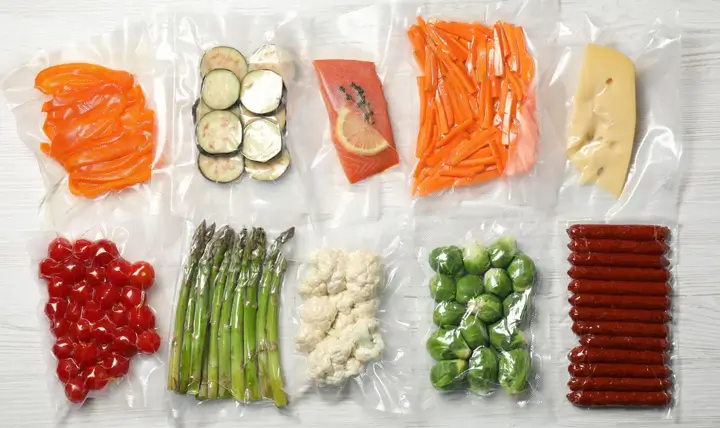
How Vacuum Pouch Packaging Works
Once the product is placed inside the pouch, a vacuum machine removes all or part of the air inside, and the pouch is immediately heat-sealed, creating a stable vacuum environment inside the package. This effectively reduces the risk of oxidation and microbial growth, while also minimizing moisture loss and reducing the damage that ice crystals can cause to product tissue during freezing — ultimately extending shelf life and improving quality stability throughout cold-chain storage and transport.
Two technical indicators are key to determining whether packaging can protect a product over the long term:
Oxygen Transmission Rate (OTR): OTR refers to the amount of oxygen that passes through 1 square meter of film over 24 hours under specific temperature and humidity conditions, typically measured in cm³/(m²·24h·0.1MPa). It measures the film’s oxygen-barrier capability — the lower the value, the better the film blocks oxygen.
Water Vapor Transmission Rate (WVTR): WVTR refers to the mass of water vapor that passes through 1 square meter of film over 24 hours under specific conditions, typically measured in g/(m²·24h). It measures the film’s moisture-barrier capability — the lower the value, the stronger the film’s resistance to moisture.
OTR and WVTR are the core indicators for measuring a package’s barrier performance. While low-cost packaging may appear more attractive on price, insufficient barrier performance often leads to product oxidation, spoilage, higher return rates, and increased customer complaints — resulting in higher overall costs in the long run.
Types of Food Vacuum Pouches
Embossed Vacuum Pouches
Embossed vacuum pouches, also known as textured vacuum pouches, have one smooth side and one side covered with various textured patterns. They are widely used in the food industry and are suitable for non-chamber vacuum sealers.
Key features:
- The textured surface creates micro-channels during vacuuming, allowing air to escape more easily and helping the pouch conform closely to the product.
- Oil-resistant, moisture-resistant, suitable for high-temperature cooking, resistant to low-temperature freezing, and effective at preserving product quality.
- Strong vacuum performance with no dead zones and a high degree of surface flatness.
- Typically made from PA/PE or PA/EVOH/PE multi-layer co-extrusion, offering good oxygen- and moisture-barrier properties.

Smooth Vacuum Pouches
Smooth vacuum pouches have a flat, texture-free surface that clearly displays the contents inside. With effective oxygen-barrier performance, they help ensure optimal food preservation and are one of the most effective and commercially popular methods of food preservation.
Key features:
- Excellent heat-seal strength, heat resistance, and puncture resistance.
- Oxygen-free protection that is long-lasting, extends product shelf life, and maintains freshness.
- Versatile performance combined with a premium appearance.

Retort Pouches
Retort pouches, also known as high-temperature cooking pouches or sterilization pouches, are specially designed vacuum pouches built to withstand high-temperature, high-pressure sterilization processes.
Key features:
- Heat-resistant up to 121°C–135°C, suitable for high-temperature, high-pressure sterilization (similar to canning processes).
- High pouch strength, puncture-resistant, and not prone to bursting.
- Do not break, crack, shrink, or develop off-odors under retort conditions.

Aluminum Foil Vacuum Pouches
Aluminum foil vacuum pouches use aluminum foil as the core barrier layer, combining vacuum packaging with high-barrier properties.
Key features:
- The foil layer provides near-perfect light, oxygen, and moisture barrier performance, effectively preventing oxidation, discoloration, and flavor loss.
- High mechanical strength, puncture-resistant, and highly effective at blocking moisture.
- Easily customizable to specific product needs, available in a variety of sizes, shapes, and designs.

Printed Vacuum Pouches
Printed vacuum pouches are vacuum packaging bags that can be printed with patterns and text on the surface. In addition to the basic functions of ordinary vacuum pouches — vacuum sealing, oxidation prevention, moisture protection, and freshness preservation — printing enables brand display and information communication, providing efficient, brand-focused packaging for a wide range of products.
Key Features:
- Support multi-color flexographic or gravure printing, enabling one-pass printing of brand logos, product information, barcodes, nutrition labels, and more.
- Can use either embossed or smooth base film depending on requirements, balancing functionality with visual appeal.
- Printing is durable, resistant to abrasion, and does not fade easily, meeting food-grade safety standards.

Sous Vide Bags
Sous vide bags are specifically designed to withstand low-temperature slow cooking and have become an important packaging material in modern fine dining and ready-to-eat meal preparation.
Key features:
- Made from food-safe materials, typically rated for temperatures from -20°C to 100°C (some can withstand up to 120°C for short periods).
- High transparency and toughness, able to withstand repeated hot-water bath cycles without releasing harmful substances.
- Extremely strong sealing that maintains a vacuum state for extended periods, ensuring the food is heated evenly during low-temperature cooking while locking in its natural flavor.

Material Structure and Thickness
Material structure is at the core of what differentiates vacuum pouch performance and cost. Most food-grade vacuum pouches are made using multi-layer co-extruded film or laminated film, typically including the following layers:
- PA (Polyamide/Nylon): Provides strength, puncture resistance, and durability.
- PE (Polyethylene): Provides the heat-seal layer and moisture resistance.
- EVOH: A high-barrier layer suited to products requiring extremely low oxygen transmission (such as seafood, cheese, and fresh meat).
- Aluminum foil layer: Used where near-zero oxygen and light barrier performance are required.
- PET (Polyester film): Provides the outer printing layer, high gloss, mechanical strength, and oxygen-barrier performance.
- RCPP (Retort-grade cast polypropylene): Provides a high-temperature heat-seal layer capable of withstanding high pressure and 121°C/135°C retort sterilization.
Thickness is equally important. Vacuum pouches are typically measured in mils or microns, generally ranging from 60 microns (for lighter-duty applications) to over 150 microns (for products with sharp edges, such as bone-in meat or seafood, which require higher puncture resistance).
Common Applications by Industry
Meat and poultry processing: High-barrier, cold-crack-resistant structures (such as PA/PE) effectively prevent freezer burn, lock in meat moisture, and significantly extend the shelf life of fresh and cooked meat products.
Seafood and aquatic products: For hard contents like fish bones and shrimp shells, customized high-puncture-resistant stretch films (such as PET/PA/PE) ensure pouches don’t tear or leak air during long-distance, cross-border cold-chain transport.
Rice, grains, and dried goods: Provide excellent protection against moisture, mold, and pests over the long term. Once vacuum-sealed, the pouches hold their shape well, making them easy to stack neatly on shelves and display as a brand.
Specialty coffee and premium roasted goods: Use pure aluminum (AL) or high-barrier metallized film (VMPET) laminate structures that block 100% of light and oxygen, locking in aroma for the long term and perfectly preserving the fresh-roasted flavor of coffee beans.
Cheese and fresh meat: An added EVOH ultra-high-barrier layer blocks oxygen and inhibits bacterial growth, maintaining the natural color and flavor of dairy and meat products.
How to Choose the Right Food Vacuum Pouch
Choosing the right food vacuum pouch mainly comes down to considering material, thickness, structure, size, safety, and intended use case.
Material and Barrier Performance
The core value of a vacuum pouch lies in its ability to block oxygen and moisture, slowing down oxidation and microbial growth while enhancing shelf appeal and brand presentation.
Common structures include PA/PE, PA/EVOH/PE, and PET/PA/PE. The PET layer mainly provides high strength, rigidity, and good transparency, and is typically used as the outer layer. The nylon layer (PA) improves mechanical strength and baseline barrier performance. The polyethylene layer (PE) handles heat-sealing to ensure a reliable seal. The EVOH layer serves as a high-performance barrier that significantly reduces oxygen transmission, further enhancing freshness preservation.
Start by clarifying the product’s target shelf life and storage conditions (ambient, refrigerated, or frozen), then match the barrier level and printing requirements accordingly, to avoid unnecessary cost or inadequate freshness protection.
Choosing the Right Thickness
Thickness directly affects durability and vacuum performance — generally, thicker pouches hold a vacuum longer and resist puncture better, but they also cost more and are slightly less flexible. Match the thickness to actual needs to avoid overspending on unnecessary material.
- 60–100 μm: Suitable for snacks, vegetables, fruits, soft foods, and everyday refrigeration. Economical.
- 100–120 μm: Recommended for meat, seafood, bone-in foods, and frozen storage. Strong puncture resistance.
- 120–150 μm+: Professional grade, suitable for large frozen meat cuts, products with liquid content, or sharp-edged seafood (such as crab or shell-on shrimp), or long-term storage.
Thicker isn’t always better — the right thickness is the best thickness. As long as it achieves the needed packaging performance, and given the growing pressure toward sustainability in the packaging industry, using a thinner pouch — without compromising performance — means consuming fewer petroleum resources and generating less plastic waste.
Surface Structure
- Embossed pouches: Feature channels on the surface that help air escape, providing good vacuum performance. Suitable for small, home-use vacuum sealers.
- Smooth pouches: Flat and highly transparent with a glossy finish, suitable for commercial chamber vacuum sealers. Excellent transparency provides a perfect surface for high-precision printing, significantly elevating the finished product’s premium look and brand image.
A mismatch between equipment and pouch type can directly lead to poor vacuum performance and higher rework rates — a detail many companies overlook when scaling up production or switching suppliers. Be sure to confirm equipment specifications with an engineer.
Heat Resistance
As ready-to-eat meals, heat-and-serve foods, and sous vide products continue to grow in popularity, more and more customers need vacuum pouches that can go directly into boiling water or be reheated. Be sure to:
- Confirm the pouch is clearly labeled as food-contact grade and rated for temperatures above 100°C (121°C or higher is recommended for sous vide applications).
- Confirm through third-party testing that the pouch does not release harmful substances or rupture under high-temperature conditions.
For companies supplying chain restaurants, group catering, or retail channels, this is directly tied to end-user safety and brand reputation — it’s not an area where cutting costs is advisable.
Compliance and Certification
Food safety compliance is the most critical factor. It’s recommended to confirm with your supplier that the material meets national food-grade standards and to request an SGS report or equivalent third-party test report, along with a clear BPA-free safety declaration.
Supply Format and Inventory Management
- Pre-made custom pouches: Fixed sizes, suitable for relatively stable SKUs and mass production, making standardized management easier.
- Roll stock cut to size: Offers greater flexibility, suitable for flexible production lines with diverse product categories and specifications, and typically more cost-effective for long-term use.
For large-scale procurement, it’s advisable to choose the right supply format based on actual production scheduling and warehousing conditions, to avoid raw material waste caused by fixed specifications.
Finding the Right Vacuum Pouch Supplier
Looking for a vacuum pouch supplier that can fully meet your product specifications? NKpacking offers embossed vacuum pouches, smooth vacuum pouches, high-temperature retort vacuum pouches, and aluminum foil vacuum pouches, along with custom printing, food safety certifications, and flexible minimum order quantities to help food brands grow. Contact us for a free sample and technical consultation.


